
When machines begin solving problems that resisted mathematicians for decades, we must reconsider what expertise means in a world where answers are becoming abundant.
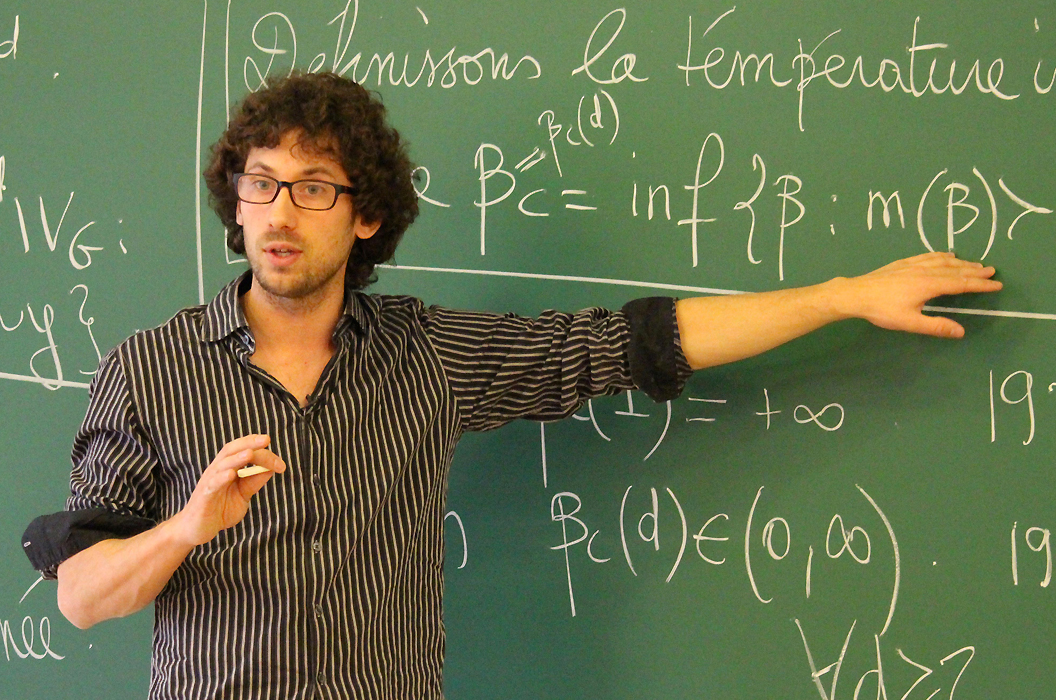
Hugo Duminil-Copin, a Fields Medalist, told colleagues at a French Mathematical Society meeting that OpenAI’s recent release had “annihilated my field of research,” as Le Monde reported. At least 16 of the released results concerned questions he had spent years trying to answer, resolved in a single release. He cried that night and woke his daughter.
It is a striking reaction from someone who has spent years mastering a discipline built around the pursuit of truth.
But perhaps the deeper question is not whether AI will replace mathematicians. It is what happens when machines can perform tasks through which humans have traditionally demonstrated intellectual mastery.
First, the facts matter, and they come in different grades of certainty.
In May, an OpenAI model disproved a conjecture Paul Erdős posed in 1946, and external mathematicians checked the proof. In September, OpenAI announced what it described as a solution to the Navier–Stokes Millennium Prize Problem, supported by a Lean-verified proof of finite-time blowup in a version involving a smooth external force. OpenAI says this meets the official formulation, and whether it does is for mathematicians to judge. The Clay Mathematics Institute’s president said the evaluation would be “deliberately unhurried” and “absolutely rigorous.” OpenAI says it does not intend to claim the prize.
In October, OpenAI released 722 mathematical manuscripts. Three were subsequently withdrawn and 14 revised. Some results have been formally verified using Lean, a proof assistant that allows mathematical arguments to be checked against precise logical rules. Others have not. One result narrows the region in which zeros of the Riemann zeta function can lie. It is not a proof of the Riemann hypothesis itself, although experts examining it largely agree that the result appears correct.
These developments are significant, but the most important change may lie beyond the individual discoveries.
From producing answers to understanding them
Terence Tao, one of the world’s leading mathematicians, argues that mathematics is moving from an era of proof scarcity to one of proof abundance. In his essay for the 2026 International Congress of Mathematicians, he focused on how results are verified, communicated and digested by the mathematical community, arguing that its institutions and culture have not yet adapted to a world in which proofs are abundant.
Mathematics may be affected early because its results are unusually amenable to objective verification, its work can be digitised, and decades of high-quality mathematical material are available for AI systems to learn from. But even here, checking a proof is not the same as understanding its significance.
A proof can establish that a conclusion follows from certain assumptions. It cannot, by itself, establish that the question was worth asking, that the assumptions reflect reality or that the result should guide a decision.
This distinction extends far beyond mathematics.
An AI system may generate a technically sound model for assessing creditworthiness. But does it account for small businesses that operate largely in cash? Does it mistake a lack of formal records for a lack of creditworthiness? Is its definition of risk appropriate for the people whose lives it will affect?
The calculations may be correct while the decision remains wrong.
The more easily machines can produce answers, the more important it becomes to understand what those answers mean, where they fail and whether they should be used.
This is not a guarantee that human judgment will always outperform AI. It is a recognition that capability, context and responsibility are different questions.
We have seen this before
Software development offers an early glimpse of this transition. Xobin’s first-half 2026 research found that traditional coding tests without AI made up 75% to 100% of technical assessment requests in the first half of 2024, but only 25% to under 50% in the first half of 2026. Meanwhile, AI-assisted tasks involving code generation, testing, debugging and explanation rose from under 25% to between 50% and under 75%.
The 2026 sample was also larger, with 1,000 or more requests compared with 500 to 999 in 2024. These figures come from Xobin’s own hiring-related records, not the entire job market. They measure the share of assessment requests, not the number of employers abandoning traditional tests. A smaller share does not necessarily mean fewer traditional tests in absolute terms.
Still, the findings point to a shift in what employers are asking candidates to demonstrate: not simply whether someone can write code without assistance, but whether they can direct, test, debug and explain AI-assisted work.
Mathematics may be an early warning for other professions because its outputs can often be checked against precise rules. Medicine, law, policy and teaching are harder to evaluate because correctness often depends on context and consequence.
My reading is that professions may be disrupted at different speeds depending partly on how cheaply and reliably their outputs can be evaluated. This is an inference, not an established law. These professions will not be exempt from AI, but their transformations may be less straightforward.
What this means for a young African
Do not abandon mathematics, engineering or other rigorous disciplines. Abandon the idea that mastering procedures is enough.
First, learn the foundations deeply. You cannot reliably identify an AI’s mistakes if you do not understand the underlying concepts.
Second, learn to evaluate what AI produces. Practise identifying flawed assumptions, testing results, explaining reasoning and defending conclusions. Learn formal tools such as Lean where relevant. Use AI to extend your thinking, not replace the thinking that allows you to evaluate it.
Third, connect your expertise to real problems.
Africa needs rigorous thinking in agriculture, healthcare, climate adaptation, financial inclusion and public administration. These problems require more than sophisticated models. They require people who understand the institutions, incentives and lived realities in which those models will operate.
Consider an AI model predicting crop yields. Its mathematics may be impeccable, yet its recommendations could fail if it overlooks local farming practices or changing rainfall patterns. Someone must be able to recognise that gap.
There is a cost to consider, too. If AI can solve problems that once gave doctoral students opportunities to develop their expertise and establish their reputations, the traditional path into mathematical research may become more difficult. Young researchers will need opportunities to develop judgment, not merely access to tools that produce results.
The opportunity is to combine technical competence with the contextual understanding required to determine whether AI outputs are useful.
Education must change, too
If a machine can solve the problem set, the problem set can no longer be sufficient evidence that a student understands the subject.
Education must assess reasoning, not just answers. Students should explain their methods, defend assumptions, identify errors in AI-generated solutions and apply concepts to unfamiliar problems.
This is especially important where foundational learning remains weak. World Bank estimates put learning poverty in sub-Saharan Africa at 86% before the pandemic, with a pandemic-era estimate of 89%. These are historical estimates, not current measurements, but they illustrate the scale of the underlying challenge.
AI can make it easier to produce the appearance of competence without developing competence itself. The goal should be to graduate people who can work with powerful systems while retaining the ability to question them independently.
Verification capacity is infrastructure
If AI generates scientific knowledge faster than local institutions can evaluate it, access to technology will not be enough. Countries will need researchers capable of verifying results, identifying limitations and determining whether those results apply to their own circumstances.
The African Institute for Mathematical Sciences provides an important foundation for developing advanced mathematical talent across the continent. Its AI for Science master’s programme with Google DeepMind in South Africa, launched in 2023, offers one starting point. African institutions and funders should build on such initiatives by investing in formal verification, AI-assisted research and independent evaluation of machine-generated knowledge.
The norms governing this transition are being written now. In October, the Simons Foundation announced a $15 million programme, alongside Anthropic and OpenAI, to support workshops and initiatives that help researchers evaluate AI-assisted results and shape shared standards for their use.
In August, Tao announced Palomar, a registry for Lean-verified mathematics. It is not a peer-reviewed journal. It is an effort to make formalised results easier to check, document and reference.
These initiatives recognise that the mathematical community needs more than faster ways to generate proofs. It needs ways to assess, organise and understand them.
African researchers should participate in these discussions. Otherwise, standards governing the attribution, release and verification of AI-generated knowledge may be shaped without meaningful input from the institutions that will also have to live with their consequences.
That means investing in mathematical education, research institutions and independent scientific capacity, not merely purchasing AI tools.
The skill that remains
There is a philosophical danger in measuring intelligence by output alone. We begin to confuse the ability to produce an answer with the ability to understand it, and fluency with knowledge.
AI challenges us to reconsider what expertise is for.
The mathematician of the future will still prove theorems. But the work will increasingly involve deciding which problems matter, interpreting discoveries and determining how new knowledge should be used.
The same shift may reach engineers, doctors, economists and teachers, though not at the same pace.
For a young African preparing for this world, the lesson is simple: learn deeply, use the machines, question their outputs and understand the world in which their answers will operate.
The danger is not that machines will know too much. It is that we may become so accustomed to receiving answers that we lose the capacity, or the inclination, to judge them for ourselves.
When answers become abundant, understanding becomes the advantage.
Photo: Hugo Duminil-Copin, courtesy of IHES (Institut des Hautes Études Scientifiques).

3 Responses
The point about checking a proof not being the same as understanding its significance is the part worth sitting with, especially given the withdrawals and revisions among the released manuscripts. A practical step: before reading any announced result, check whether it has a Lean-verified proof and whether the statement matches the original conjecture’s exact formulation, not a modified version. Keeping a short log of those two facts per result would make discussions about what was actually solved much clearer.
I love how easy it is to navigate this site. Had a great run last night and the bonuses are actually fair. Check out bd499bat if you want some action.
The slots here are so addictive and the graphics are top notch. I had a great winning streak last night at pgwin233casino.